





In the tech world, brilliant ideas are born every minute. But only a few of them become real products – and even fewer survive long enough to matter. Numerous startups fail silently, never reaching a single user. Why does that happen? Is it luck or genius? Funding or a killer idea?
Let’s take a realistic journey through the world of tech startups. With years of experience in the startup ecosystem, we at DigitalMara have amassed invaluable insights that we are excited to share, alongside our technical expertise in developing innovative products.
If you’re a developer, visioner, or tech enthusiast dreaming of your own product or startup, read on.
Debunking the myths of startup success with a realistic perspective
Myth 1: All great startups were born in a garage by college dropouts
Truth: Most successful founders aren’t hoodie-wearing 19-year-olds. They’re experienced professionals, often in their mid-30s or older, with years in the industry, solid networks, and real-world knowledge. The “college dropout becomes billionaire” story is the outlier, not the rule.
Myth 2: The idea is everything
Truth: An idea is only the spark. The flame is execution, adaptability, and the people behind it. A startup’s success depends more on iteration and problem-solving than on one “brilliant” insight. In fact, most winning products started out as something else entirely.
Myth 3: If the product is good, it will sell itself
Truth: Nope. Even amazing products like Airbnb and Slack had to fight for attention. Getting your first users is a grind – outreach, cold emails, user interviews, pilot programs, painful pivots. A great product is necessary, but not sufficient. Users won’t magically appear.
Myth 4: Money solves everything
Truth: Funding without focus can actually accelerate failure. Without product-market fit, a solid team, and strategy, money is just fuel on the wrong fire. Don’t think of funding as a win – it’s a tool, and often a dangerous one if misused.
Myth 5: Money doesn’t matter
Truth: It absolutely does. You need servers, hardware, cloud credits, marketing, legal help – and, let’s face it, founders have to eat. Passion pays in adrenaline, not rent. Every startup needs resources, even in the early days.
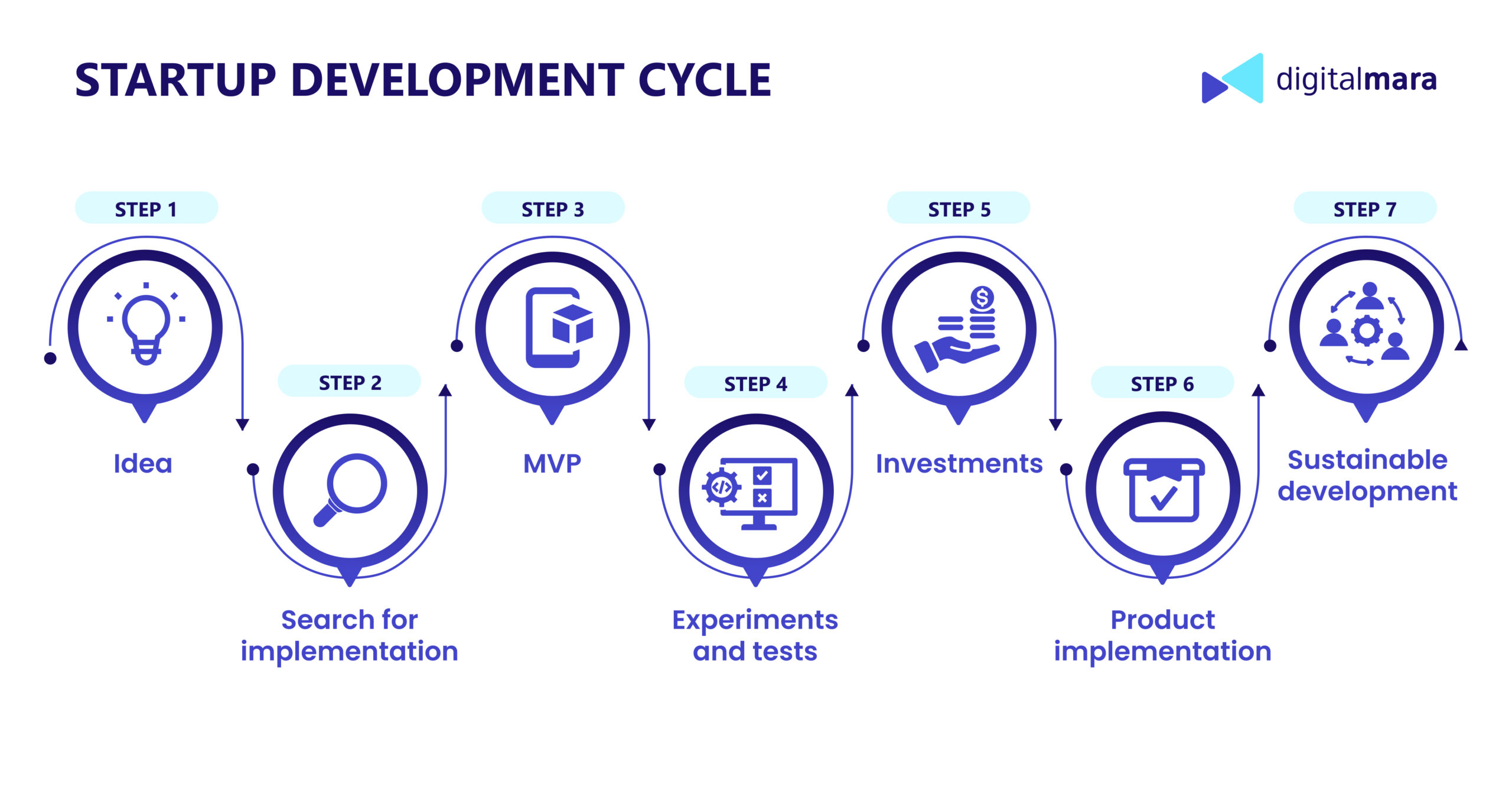
The Idea – where it all starts or ends up
Ideas feel exciting. They spark energy. But beware: a compelling idea can also trap you in a fantasy. It might be solving a problem only you have. Or worse, it might already have been solved better elsewhere.
Startups often die chasing non-problems or solving real problems in ways that no one wants. Before you write a single line of code, validate:
- Is this a problem for anyone besides me?
- Are people currently solving this another way?
- Would my solution be meaningfully better, faster, or cheaper?
Start small: talk to friends, post on forums, ask on social. Social media is still a free focus group. If people lean in, you may be onto something.
Another danger: your idea may be too early. Maybe the market just isn’t ready. In that case, you have two main plays:
- Build an MVP and test it. See if you can spark early demand and shift minds.
- Protect the Intellectual Property and wait. If the idea is defensible, you can patent the tech or process and wait for the market to catch up. In this case, it is essential to describe the technology or create a prototype.
Your first MVP: Imperfect yet valued
What is an MVP?
MVP – A Minimum Viable Product is the simplest version of your product that still solves a problem. It’s not pretty. It’s not feature-rich. But it works, even barely, and it proves a point.
Does an MVP need to be perfect?
Not even close. It needs to function and demonstrate core value. If visual design is the value (e.g., iPhone), then yes, aesthetics matter. But if it’s a backend tool, CLI, or API – get the value right, then polish.
Common MVP mistakes:
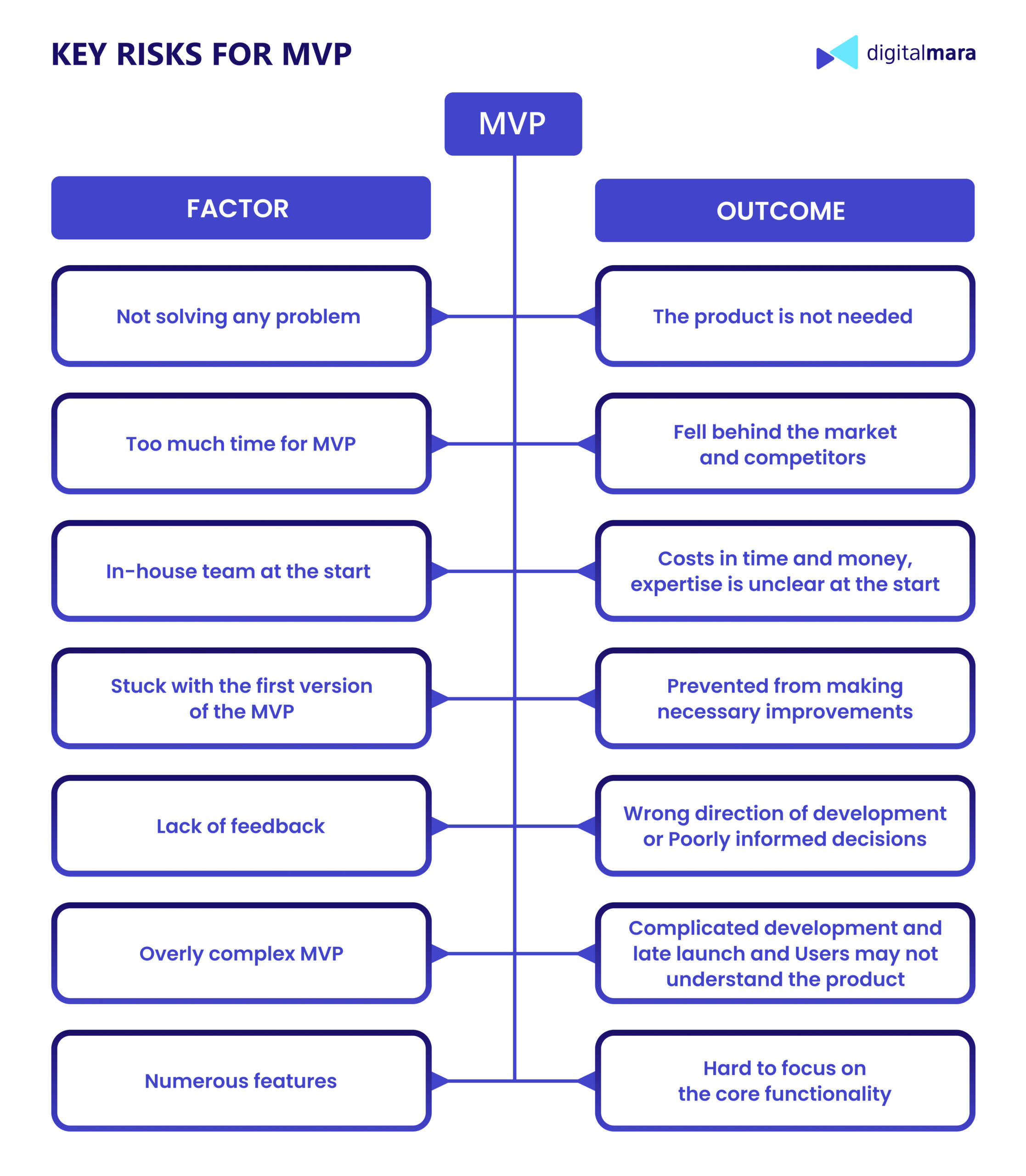
- Trying to build a polished product out of the gate – you just waste time
- Avoiding feedback – ignoring users’ experience is your worst enemy
- Stuffing in too many features – blurs your core value
- Spending months on the first MVP – the market may move on
- Getting emotionally attached – MVPs are meant to die and evolve
Sometimes, you don’t even need a working prototype to test a concept. A clickable mockup, a pitch deck, or a landing page with a sign-up form can be enough to gauge interest or even secure early funding.
What to do when you have a limited budget or lack the necessary skills to build an MVP
Building an MVP is often essential — especially if you need to demonstrate your concept to potential investors. However, limited resources or a lack of technical expertise can pose significant challenges. One practical solution is to outsource MVP development to a specialized company.
At the MVP stage, building an in-house development team is often not the most efficient approach. Assembling a team takes time — a resource that startups rarely have in abundance. It’s also expensive. In early-stage development, work typically happens in iterations, which means your team may be idle for up to 50% of the time, yet you’ll still need to pay full salaries.
Additionally, at this stage, you may not yet know what skills or technologies will be required long-term. Technical needs can evolve rapidly, and the competencies required for an MVP might differ greatly from those needed later. By outsourcing, you can access the exact expertise you need, when you need it, without long-term commitment or overhead.
Keep personal data protection in mind when building your MVP
When developing an MVP, it’s crucial to remember that you’ll need to operate under the legal frameworks of both your home country and the countries where your product will be used. Personal data protection is a major focus right now, and ignoring it could mean your product never makes it to market.
In Europe, there’s a unified regulation called the GDPR (General Data Protection Regulation). If your product will be used in the EU, make sure you understand what GDPR requires.
In the United States, there isn’t a single federal law, but several key regulations may apply depending on your product:
- COPPA – if your app targets children
- FCRA – if you deal with credit information
- CCPA – California’s privacy law, like GDPR
Also, keep in mind that many U.S. states have their own privacy laws.
First investments: choosing the right one
Once your MVP is tested, you’re no longer just a “cool idea.” You’re on your way to building a business — and now comes the money question.
That means dealing with real investment rounds. And here’s where things get tricky.
Red flags in early funding
- Choosing investors based on check size, not alignment. Money is tempting, but early on, smart money is what matters. A smaller check from someone with deep industry knowledge and connections is more valuable than a giant check from someone who doesn’t understand your space.
- Equity battles and co-founder friction. Early-stage tension around roles, vision, and ownership is common. Talk openly. Define your agreements early – and put them in writing. Founder conflicts are one of the leading causes of startup failure.
- Overvaluing too soon. A high valuation may feel great, but it can trap you. It dilutes your stake and sets unrealistic expectations for future rounds. If you can’t justify growth, future investors will back away.
Final takeaways for young founders:
- Your first investor should be a partner, not a sponsor. Choose people who believe in your product and understand your space.
- Document everything. Startups break friendships. Legal clarity protects them.
- Treat your MVP as a tool, not a trophy. Ship early, listen to feedback, iterate fast.
- Don’t romanticize funding. Money magnifies everything – good or bad.
- Solve a real problem. Test it early. Be brutally honest. You’re not building a dream. You’re solving someone else’s nightmare.
Growth and scaling: from MVP to real business
Your product works. The team is growing. Revenue is finally coming in. Everything feels like it’s falling into place. But in reality, this is where the real challenge begins. Growth is a make-or-break phase. Some companies become unicorns. Others collapse at the first sign of market turbulence.
At this stage, leadership starts to matter more than anything else. In the early days, you could focus purely on the product and technology — maybe even build everything yourself with a small, scrappy team. But now, you need people. A lot of new people. Who you hire, how you lead them, and what culture you create will define your company’s future.
Scaling a company isn’t just about people — it’s about process. In the MVP phase, creative chaos was your superpower. But once you have dozens of employees, weekly code pushes, and users flooding your support chat, chaos becomes a liability. You need systems.
Start introducing processes gradually, as you grow. You don’t need a board of directors or layers of red tape early on. But you do need clear roles. Once your team hits around 10 people, you need a manager. And you need constant, deliberate communication – within teams and across them.
Top challenges for founders during growth
- Delegation. Learn to let go. Founders must shift from “doing everything” to leading others.
- Hiring managers and professionals. You need experienced people who share your values — not just friends. Culture and mindset matter more than hard skills, especially if someone’s willing to learn fast.
- Keeping the startup spirit alive. Fast communication, simple workflows, and an experimental mindset should remain — even as structure grows.
- Team conflict. Tension between “early” and “new” hires is common. Strong communication and a shared mission help align the team.
- Strategy over impulses. Don’t fall into the trap of chasing hypergrowth for its own sake. Scaling too fast without building connections and processes will backfire. Stick to a clear, realistic strategy.
Evolving Product Development: From MVP to Scalable Systems
As your product matures from MVP to a fully-fledged, scalable solution, your development approach must evolve accordingly. What worked during the early stages — rapid iteration, lightweight planning, minimal infrastructure — won’t work with a stable product.
To support scale, development must become more structured and predictable. This means implementing robust processes, aligning roadmaps with business goals, and adhering to development schedules. Planning becomes critical, not just for delivering features, but also for maintaining quality, stability, and long-term maintainability.
Your infrastructure should be purpose-built for the demands of a production-grade product. Scalability, observability, reliability, and security must be first-class concerns. This may require re-architecting systems, investing in CI/CD pipelines, or adopting cloud-native patterns to handle increased load and complexity.
As the organization scales, so will your teams. It’s easy to focus on features and code, but as your product grows, your success will increasingly depend on how well your teams coordinate, communicate, and collaborate. Invest in the tools, rituals, and culture that make this possible.
Final words
Bringing an MVP to life — and eventually evolving it into a fully-fledged product — is not just a technical task, but a strategic journey. An MVP requires thorough research, smart marketing, active promotion, and continuous user engagement. Product development is a complex, multi-layered process that goes far beyond writing code.
At DigitalMara, we’re equipped to handle the entire technological side of that journey – from early-stage consultations to full-cycle development. Our experience allows us to define the right infrastructure at every stage, choose the best technologies for your vision, and build the ideal team for the job.
While you focus on growth, product-market fit, and customer acquisition, DigitalMara will take care of turning your idea into a reliable, scalable, and ready-to-launch product.